27 August 2010

sink or swim (or something in between)

My first (abbreviated) week of nursing school is complete. This week was atypical because classes began Tuesday, and Wednesday was void of any classroom time due to two clinical orientation programs. (My actual clinical experience, however, won’t begin until late September/early October.) The first five weeks (the entire semester is sixteen weeks) of classes are dedicated to fundamentals of nursing lecture and lab; week six will see the fundamentals class transform to med-surgery lecture, lab, and clinical. In addition to those courses, pharmacology is spread across all sixteen weeks. The fundamentals lecture course is all about reading, reading and more reading. This first week, for example, is dedicated to reading EIGHT chapters, and next week sees a reading assignment of five chapters. As I said: reading reading reading. Because of the chaotic nature of week one, I had no pharmacology classes, but a make-up day has been scheduled for mid September. My fundamentals instructor warned us about pharmacology, so I’m bracing myself for more mental heavy lifting.

For me, week one was like being thrown into the deep end for the first time: I initially felt overloaded by the shock of, well, everything, but I quickly gathered myself and began assessing the shocking reality of my new situation. I’m not swimming yet, but I’m staying afloat relatively easily. Indeed, the following weeks and months will be unlike anything I have ever experienced.

xx

23 August 2010

return

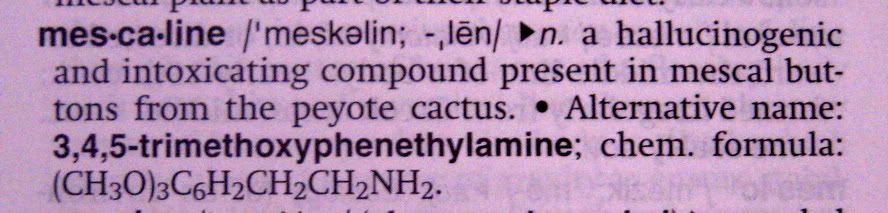
It’s been a few days since my last entry, an entry that was written under the slowly rising waves of mescaline. Indeed, last Thursday I experienced the most intense psychedelic experience of my life. I also found the trip to be extremely therapeutic. I want to share some of my experiences, but attempting to piece the whole thing together is practically impossible. Relating my experiences to a sober reality will be a work in progress, and I plan on posting fragments of that Thursday over the next few entries.

First, a mescaline trip (calling the experience a “trip” seems entirely inadequate and oversimplified) burns for 12-14 staggering hours. I’ve dosed LSD several times throughout my life, and while there are some similarities between mescaline and acid, there are many more nuances during a mescaline experience than an acid one. The ascent to mescaline’s peak is much more subtle, more gradual than LSD; the window of an LSD trip is open 8-10 hours, which, in my opinion, results in a steep rise and fall of the experience, but the sheer length of a mescaline experience means nothing is rushed, neither the ascent nor the descent, meaning it won’t overwhelm the senses as acid tends to do. I have found LSD to be in incredibly frustrating chemical when attempting to initiate the creative process. The onset of LSD is like a battered shoreline as a hurricane nears; the seas of a mescaline experience, however, are much smoother, leading to an experience that is more introspective than an acid trip. I don’t believe I could have achieved such deep, resonant insights into my being if under the command of LSD. Mescaline’s stability enables its user to open the locked doors of perception, which, in my opinion, is more difficult to do under LSD.

My time is up, so I’ll end with this: nursing school begins tomorrow, and while I’m filled with anxiety about this next chapter of my life, I now find myself much more confident and less negative about its prospects. I sincerely believe that psychedelics, if used responsibly and correctly, can provide great therapeutic value to some people. I look forward to sharing some of the insights I gained during my experience last Thursday.

xx

19 August 2010

meskǝlin and the impossible objects


img 1


Consumed about 25 grams of Trichocereus peruvianus (Peruvian Torch) powder two hours ago. Thankfully the raging nausea that commonly accompanies ingestion has subsided significantly. Early observations: my inner being is glowing in torrential tides of empathy; I'm reminded of why psychedelics offer great therapeutic value: they strip everything cosmetic and superficial about YOU and YOUR EXISTENCE and allow you to freely explore yourself and your emotions; in many ways a psychedelic experience is the final frontier of human existence -- there are no guidelines, no governing bodies (both external and internal), just you and the Penrose staircase of your existence; periphery of my vision is flooded with twinkling light right now.

More later.

xx

falling from space

Last December I posted a very cool point-of-view video here of Space Shuttle Atlantis' ascent to space. Tonight I came across another video that is equally amazing, if not more so. The video below is taken from a camera mounted on one of Space Shuttle Discovery's two solid rocket boosters. The boosters are responsible for propelling the shuttle into space during the first two minutes after launch and are then dropped from the craft. This video captures the booster's complete fall (about 146,000 feet) from space, through Earth's atmosphere and into the Atlantic Ocean. Very cool stuff.


17 August 2010

inception in bruges

I saw Inception Saturday night and was slightly underwhelmed. It’s a good movie with an original story that’s simultaneously disorientating and mystifying, but it didn’t hit me as did Christopher Nolan’s earlier masterpieces Memento and The Prestige, which are two personal favorites. Inception might be the first film I’ve ever seen in which analyzing it afterward is just as enjoyable, if not more so, than the actual viewing process. Perhaps this is the point. Thinking about that strange dream you had last night slips into a totally different skin when you’ve had time to step away and rethink it; your subconscious fills in those missing gaps, and acting like a glue, it pulls everything together and forms something… something very bizarre. The end product is a strange panorama of events that fails to make sense, and the more effort expended attempting to materialize a reason, a logic behind it, the more things fall apart. For me, Inception isn’t about piecing the pieces together (like wondering if Cobb’s wobbling top will fall or remain spinning); it’s about letting your subconscious project light into those dark areas – the pain, the regret, the sadness – those things that don’t, or won’t, make sense and rearranging the colors into something not just meaningful, but better. Four stars out of five, although I might bump it up to five – the more I discuss Inception, the better it gets.

(Interesting article to read: Everything You Wanted to Know About Inception)

I also watched In Bruges, a dark comedy that came out in 2008. This one was surprisingly good. Two hit men, Ray and Ken (Colin Farrell and Brendan Gleeson), are sent by their boss, Harry (Ralph Fiennes), to Bruges, Belgium, to hang out and wait for the next hit. While there, Ray and Ken confront past mistakes and decide to get out of the murdering business, but Harry has other plans. In Bruges is a very British film – razor sharp dialogue; dry, black comedy; and skilled actors. If you’re in the mood for a Brit crime drama-comedy, check it out. Four stars out of five.

xx

14 August 2010

back home

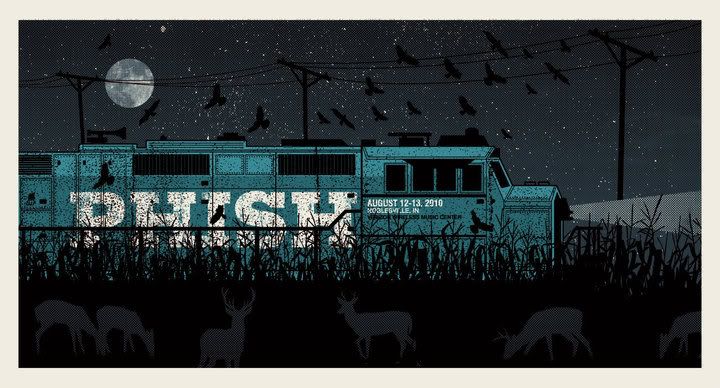
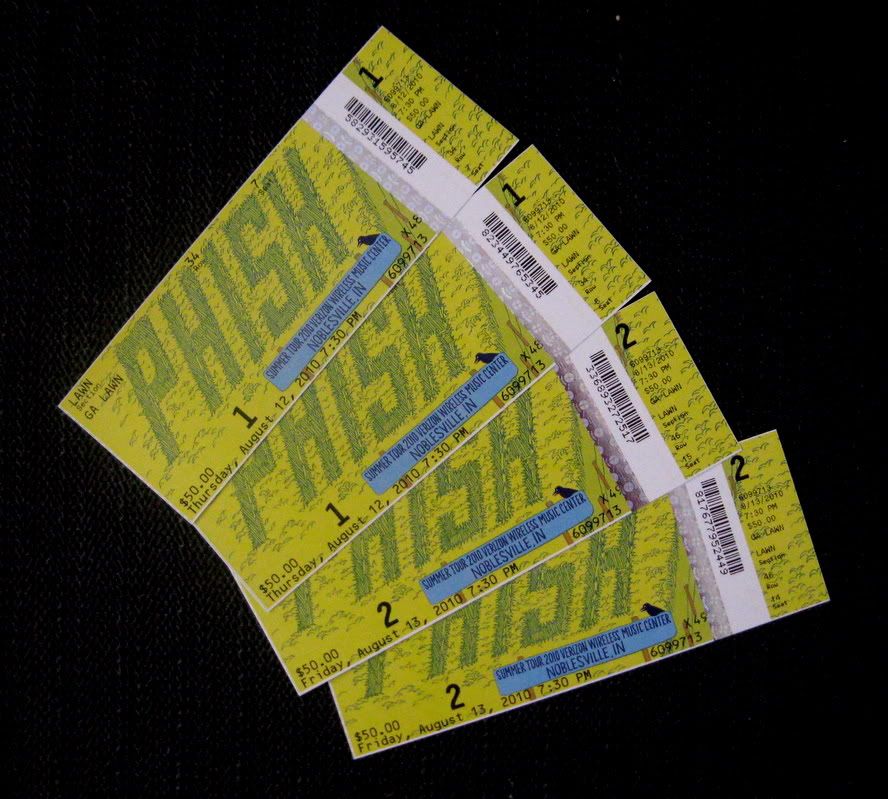
Wow. What an incredible two days of camp 'n Phish. Day One was eh: the heat and humidity were crushing and Phish's performance was a little shakey. Day Two, however, was perfect: PB and I rescued ourselves from the elements and spent some of the afternoon in Castleton (which included a surprise viewing of Dinner for Schmucks -- yeah, don't ask, it's a long story), and Phish's performance was stellar (jams varied from Bitches Brew-era jazz fusion to space-out ambience reminiscent of Pink Floyd circa Meddle -- yeah, it was kinda epic). From 4PM until sunset on Day Two, a thick cover of clouds arrived and saved everyone from another grueling evening of heat.

This was PB's first Phish experience, and I last saw the band ten years ago. Besides having a great time, we both shared many, um, interesting experiences. (An ice-cold shower at 7AM Friday morning was the most exhilarating experience I've ever had.)

Oh, and the chemicals were glorious too.

No doubt, some who attend a Phish experience are there for the drugs and alcohol, but the true phans are there to share in the experience, which is why Phish attracts a cult following.

It's so difficult to simply exist in the moment. Most of us are weighed down by the anvils of our existence -- an unintended consequence of being productive members of society. For me, a Phish show represents an opportunity to transcend for several hours my everyday reality and exist freely within a special slice of space and time. And as with most memorable moments, you never fully appreciate those moments until you view them through a recollection, a memory. And it's those intangible glints of light that accompany those memories that make the Phish sound so (pardon the hyperbole) magical. When I'm away from the venue and listening to the band on my stereo, I hear more than the music; along with the music come those aforementioned glints, the sparks that ignite my bank of memories of past experiences -- invisible photographs transmitted audibly.

I could fill a few more paragraphs with my anecdotal evidence of why Phish hold such a unique space in my life and why the band should be more respected by those outside its fan base, but spelling out and defining the reasons would deconstruct the magic.

And why do that?

xx

11 August 2010

did kid a predict 9/11?

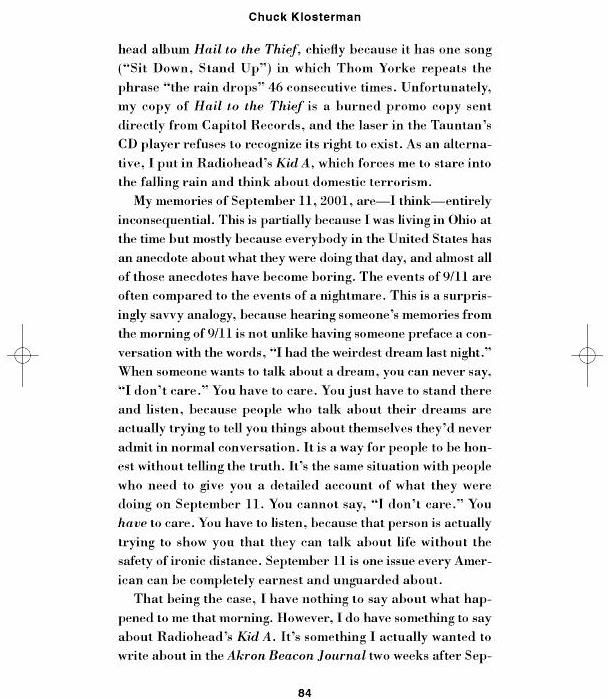
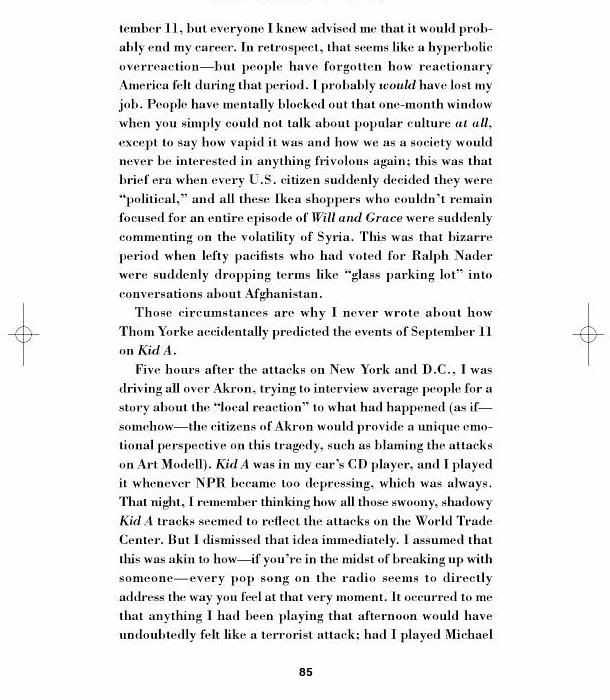
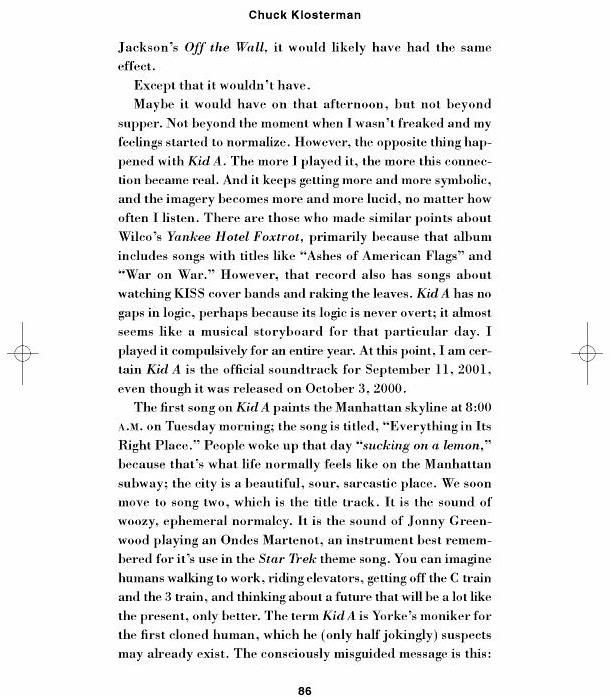
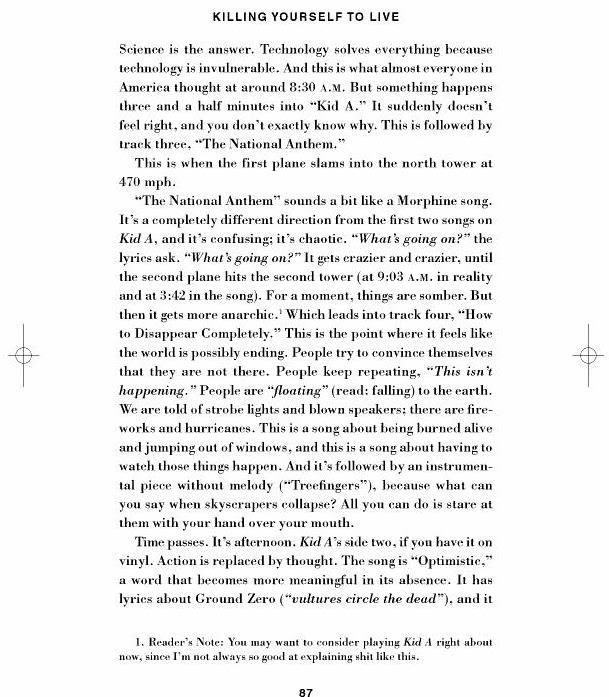
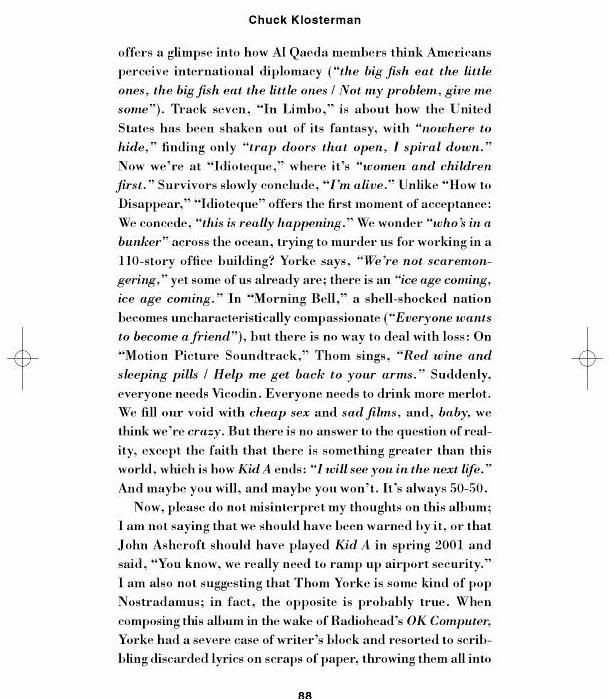
Just caught wind of this: Chuck Klosterman speculated in his 2005 book Killing Yourself to Live: 85% of a True Story that Radiohead "accidentally predicted" the events of September 11, 2001. In the following pages (found in Google Books) he makes his case citing specific lyrics and musical cues from Kid A, which came out eleven months before 9/11. His claim and evidence are absurd, but I'm a sucker for this type of stuff. Plus, it's an interesting read.
Photobucket
Photobucket
Photobucket
Photobucket
Photobucket

10 August 2010

of note

I haven't blogged recently because I've found nothing of interest to write about, but here are a few things that caught my attention.

=-=-=-=-=-=-=-=-=-=-=-=-=-=-=-=-=-=

Last night I watched 300, which was, surprisingly, quite good. After watching it, I visited the Wikipedia entry and found it laughable that some notable professors detested the film because of its historical inaccuracies. Give me a break. The film (don't know about the Frank Miller graphic novel -- haven't read it) never claims to be a historical document of the Battle of Thermopylae. Is the name "Thermopylae" even mentioned in the film? I'm sure some kids came away with a false impression of the Battle, but those who were truly intrigued would've done their own research to separate fact from fiction. Leave it to the overeducated to suck the fun out of a gritty action flick. Eggheads aside, 300 utilizes the same CGI effects that made the film adaptation of Miller's Sin City look so dazzling. Director Zack Snyder could have drowned the film with excessive effects, but he didn't. 300 strikes the perfect balance between stylized action sequences and artistic flair. Also, Gerard Butler as King Leonidas was perfect. Gave it five outta five.

=-=-=-=-=-=-=-=-=-=-=-=-=-=-=-=-=-=

In just a couple of days PB and I will be spending three days and two nights camping for the two-day Phish extravaganza at Verizon Wireless in Noblesville. I can't wait. It's been a decade since I last saw The Phish. This time will definitely be different though; I never camped for any of the previous shows. I'm already giddy with excitement. Can't wait.

=-=-=-=-=-=-=-=-=-=-=-=-=-=-=-=-=-=

I've been patient with Arcade Fire's critically praised The Suburbs, and it's certainly beginning to grow on me, but I can't seem to make the connection with it that I've made with other albums I love. The stunning High Violet by The National is still atop my best-of-2010 list.

=-=-=-=-=-=-=-=-=-=-=-=-=-=-=-=-=-=


=-=-=-=-=-=-=-=-=-=-=-=-=-=-=-=-=-=

Interesting book (that I wish to read soon, er, sometime): Confession of an Economic Hit Man by John Perkins
Perkins writes that his economic projections cooked the books Enron-style to convince foreign governments to accept billions of dollars of loans from the World Bank and other institutions to build dams, airports, electric grids, and other infrastructure he knew they couldn't afford. The loans were given on condition that construction and engineering contracts went to U.S. companies. Often, the money would simply be transferred from one bank account in Washington, D.C., to another one in New York or San Francisco. The deals were smoothed over with bribes for foreign officials, but it was the taxpayers in the foreign countries who had to pay back the loans. When their governments couldn't do so, as was often the case, the U.S. or its henchmen at the World Bank or International Monetary Fund would step in and essentially place the country in trusteeship, dictating everything from its spending budget to security agreements and even its United Nations votes. It was, Perkins writes, a clever way for the U.S. to expand its "empire" at the expense of Third World citizens. While at times he seems a little overly focused on conspiracies, perhaps that's not surprising considering the life he's led.
=-=-=-=-=-=-=-=-=-=-=-=-=-=-=-=-=-=

Twenty-five seconds of pure win can be found here.

=-=-=-=-=-=-=-=-=-=-=-=-=-=-=-=-=-=

That is all.

xx

04 August 2010

fatalistic failure

Insanity will officially begin in nineteen days. After today's shipment, I have every book (minus a pharmacology textbook, still waiting on that one) required for the approaching semester. I saved over $300 ordering these books from Amazon and, surprisingly, Walmart.com, so I'm feeling good about that. But that's about it. I immediately transform into an anxiety-ridden heap of flesh and nerves when I consider the next phase of my life. To say I have zero confidence in my abilities to succeed within the nursing program and the profession would be a glaring understatement. Never mind the physical act of achievement, I'm unable to conjure a mental image of me success stability (together). I simply don't see it and cannot comprehend it.
For example, consider my recent experience with the new job (pizza delivery guy). Essentially, my two responsibilities are delivering food and dish washing. Simple, right? Well, I felt quite overwhelmed after my first few days. The act of integrating oneself into a preconfigured system is challenging. The mechanical aspects of the job didn't pose a problem; it was the order, the systemization of the tasks that proved difficult to grasp and remember.

I'm constantly battling myself. On one hand, I feel as though I have shorted myself in spending my twenties accomplishing very little. I'm a smart, competent person who should dedicate myself to something meaningful and important, I've told myself countless times. Contrarily, I've destroyed myself emotionally with unrealistic expectations and destructive conclusions about who I am and my capabilities, both proven and potential. When I write of unrealistic expectations, I'm speaking about the initial challenges of my new job. I now realize that an unrealistic and absurd belief that I, somehow, should have known the order and systemization of my duties while simultaneously knowing nothing about said systemization and duties led to those feelings of ineptitude. Ridiculous, I know, but when the typical anxieties of a new job are coupled with the realization of working among high school kids and young twentysomethings, well, things can get overwhelming very quickly, especially when you're a socially awkward person like myself.

The paradox of creating, usually unconsciously, unrealistic expectations is that they aren't based on a genuine understanding of the situation, which renders achievement of those expectations practically impossible. I now realize I possess a fatalistic view of failure and success, which is why I have difficulty envisioning my success in school and nursing (and virtually everything else, for that matter). Fatalism eliminates the independent variable from the circumstance or challenge, leaving previous successes moot. I cling to flawed logic: even though I initially thought my eventual successes would be failures, I "know" I'll fail this time because that's my default position and not every attempt is successful (essentially it is this: there's never been a better time to fail than this time).

See, the fucked up thing about all this is that I realize on every level my logic is unreasonable, even irrational. Yet its skeleton remains, pulverizing my confidence into oblivion, leaving me a self-rejected, zero self-esteem mess.

xx

30 July 2010

fives and fours

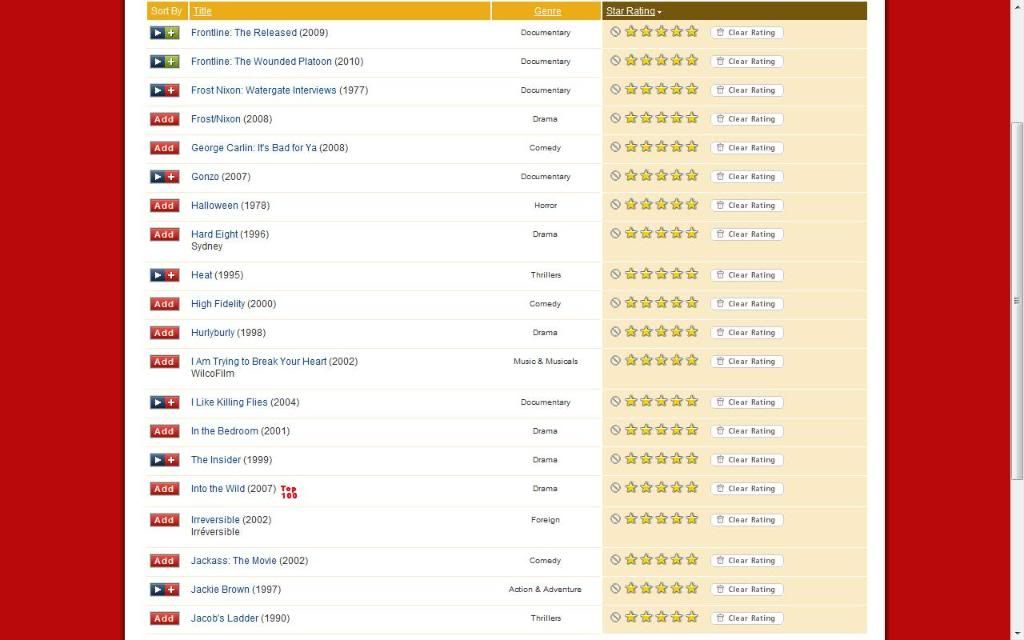
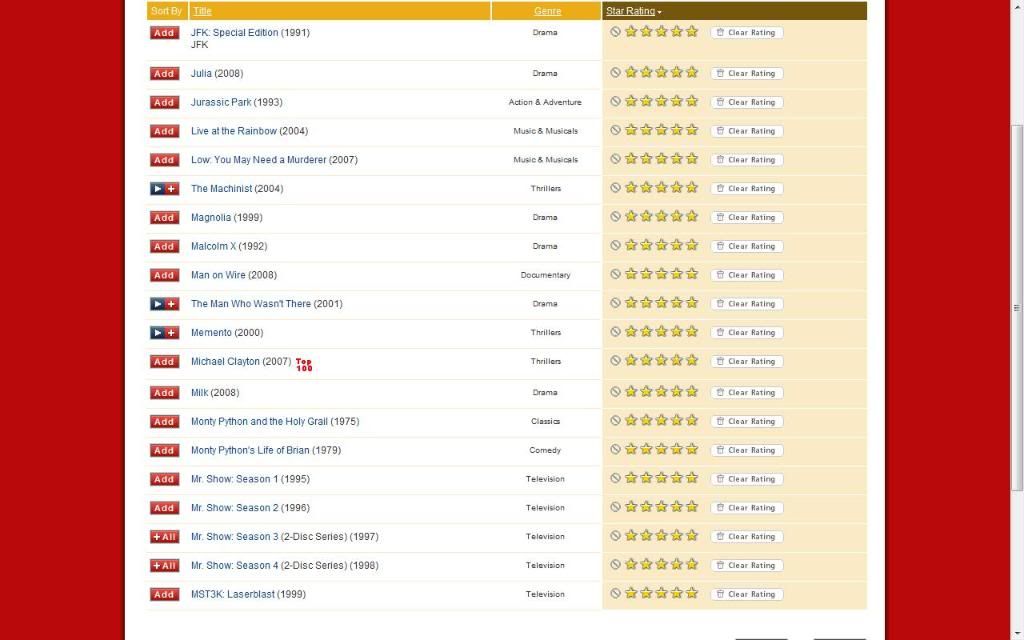
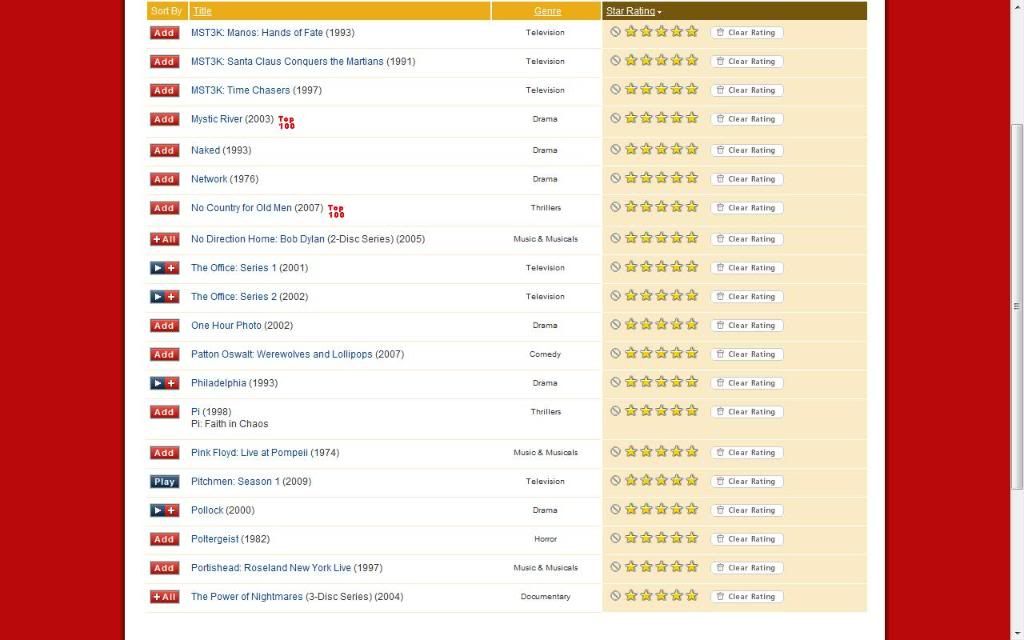
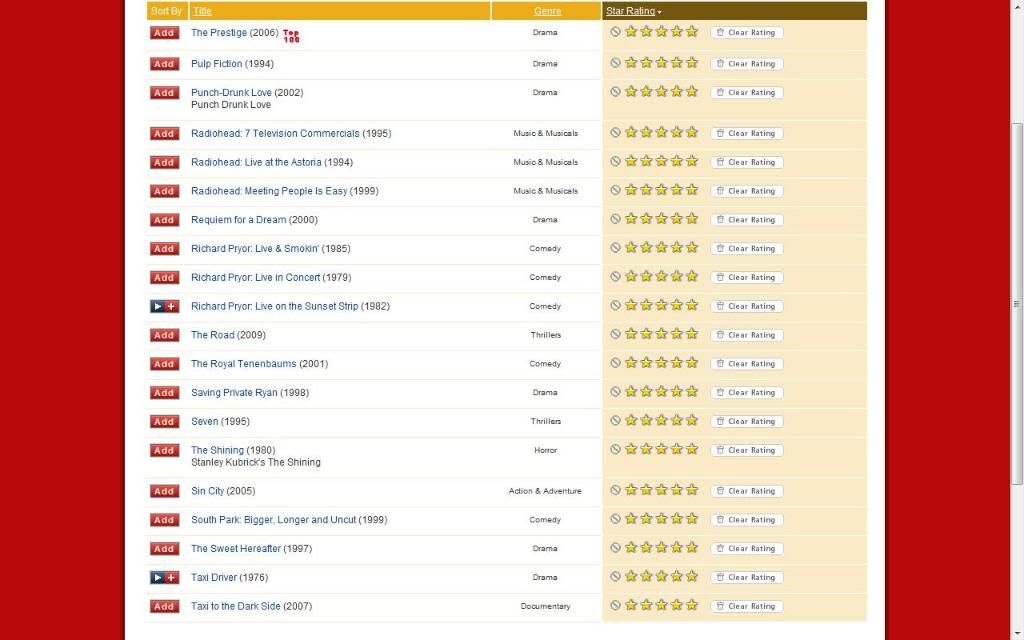
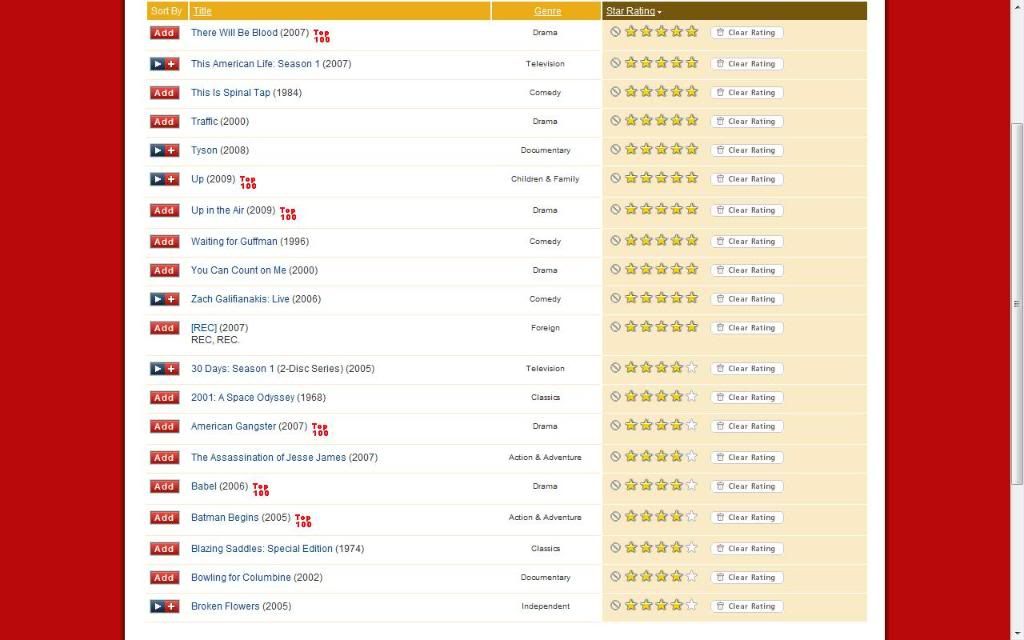
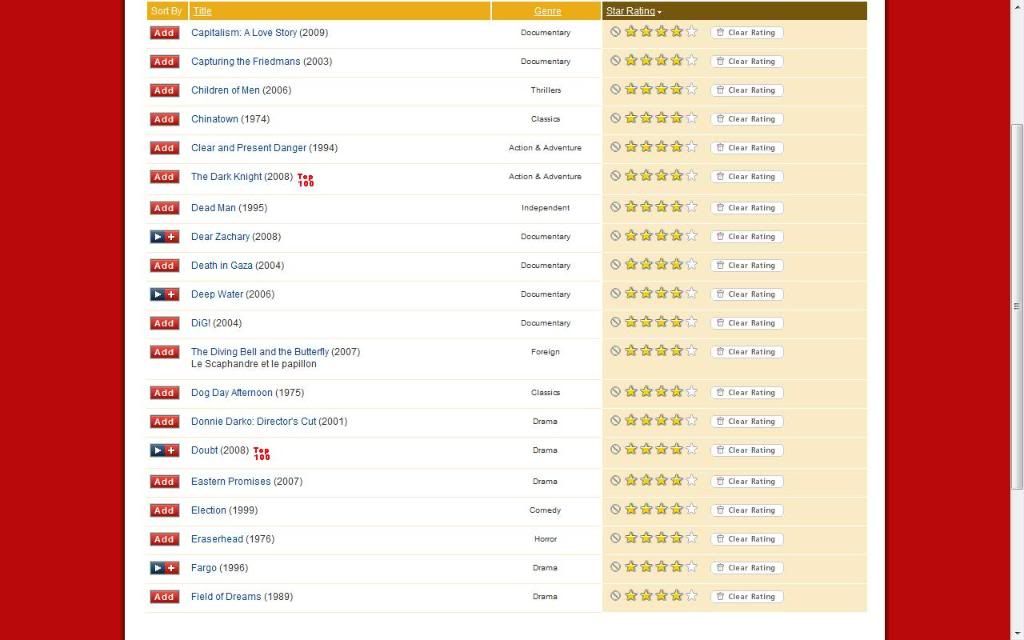
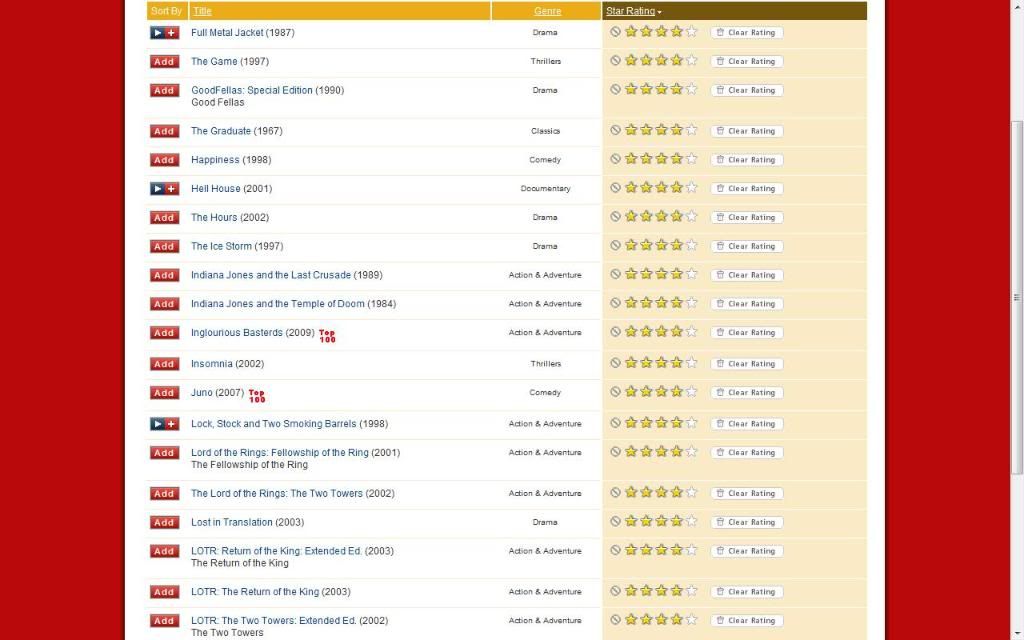
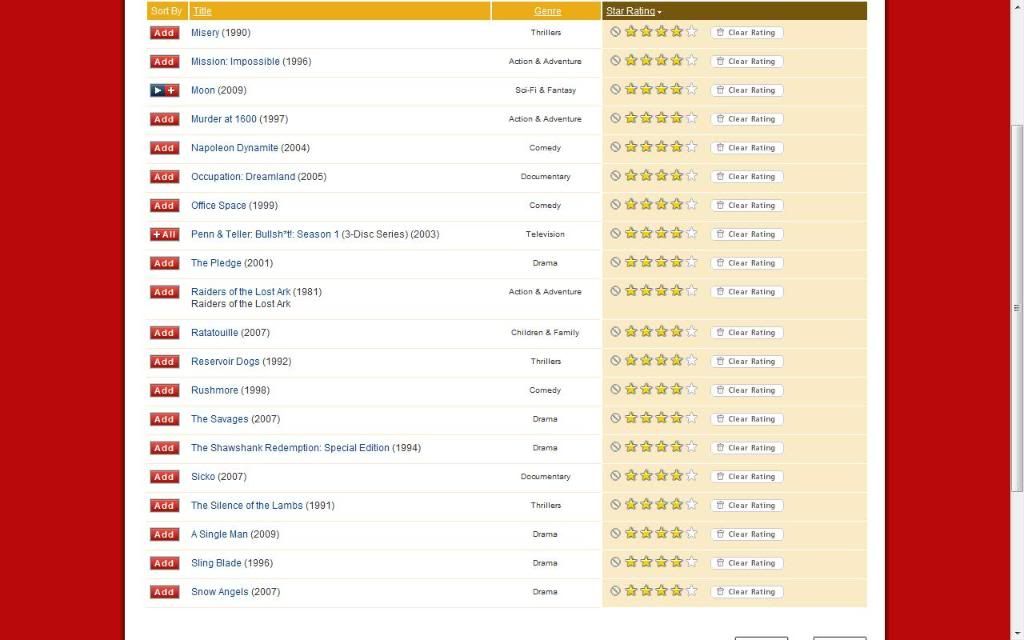
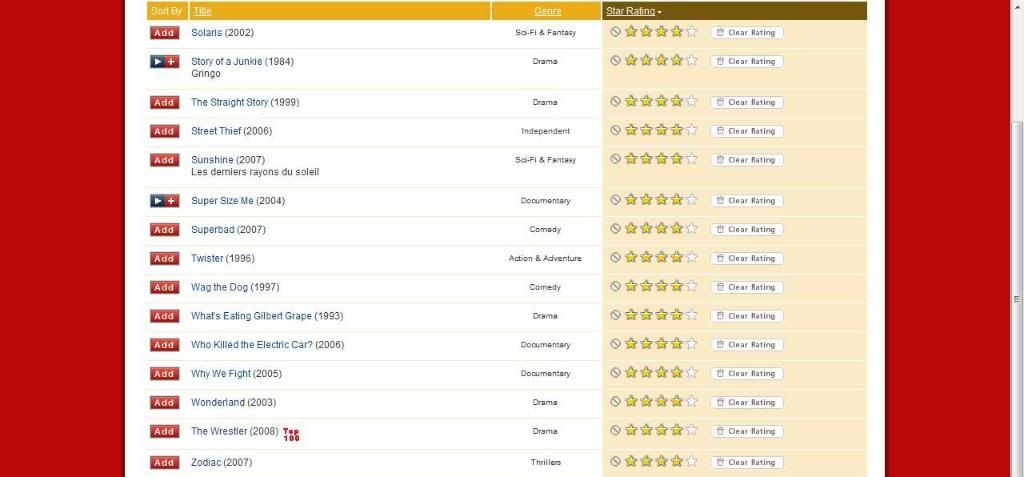
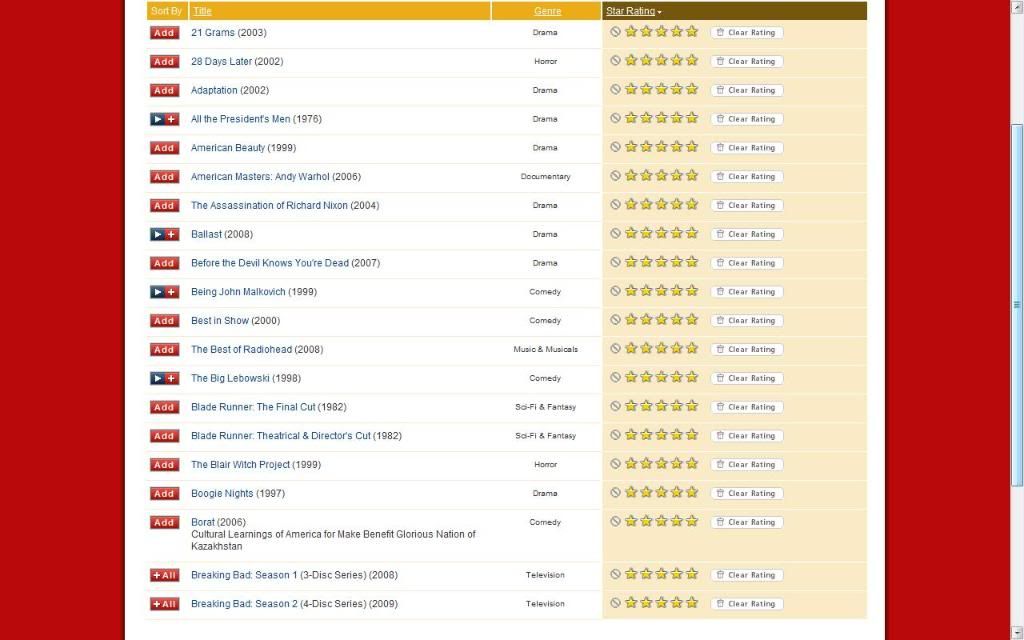
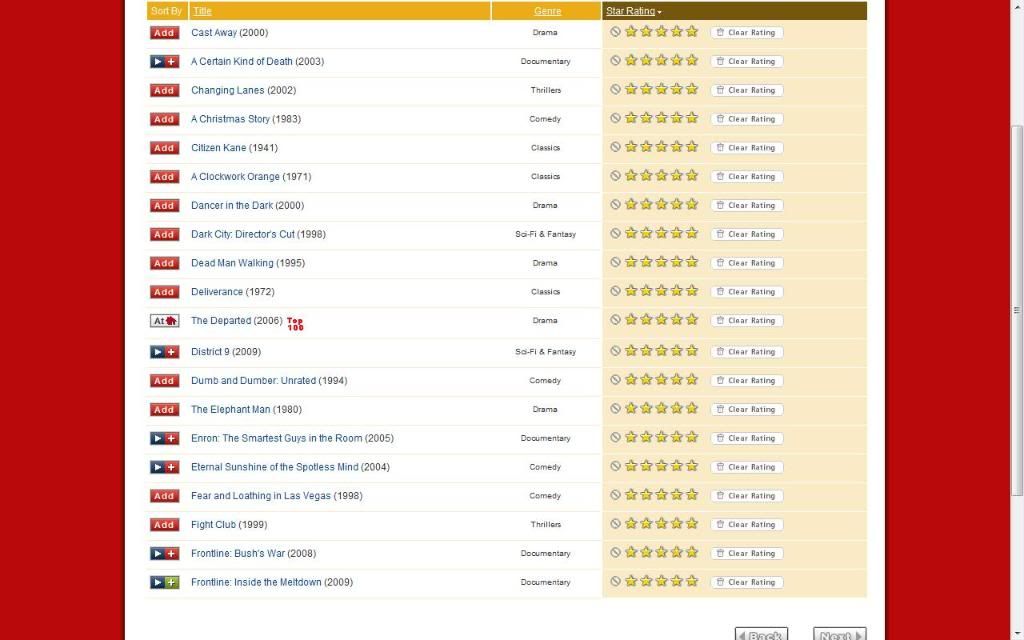
Here are all the films I've rated through NetFlix as either a five- or four-star flick. The most recent five-star addition is Martin Scorsese's epic The Departed, which I watched earlier tonight. Wow. Scorsese has a patent on the crime-drama genre, and, in my opinion, he fails only when he attempts to venture away from that brand. Bringing Out the Dead and The Aviator are dreadful, but The Departed is a damn near perfect film. Jack Nicholson epitomizes evil; Leonardo DiCaprio is the underdog everyone wants to cheer; and Matt Damon is a scumbag. Regardless of their roles, their executed perfectly in a masterfully told story. I can't say enough about this one. Five stars all the way.

Photobucket
Photobucket
Photobucket
Photobucket
Photobucket
Photobucket
Photobucket
Photobucket
Photobucket
Photobucket
Photobucket

25 July 2010

meh

Can someone please tell me why The Deer Hunter is regarded as one of the great films of American cinema? It's #79 on AFI's 100, but I found it to be incredibly mediocre.

xx

24 July 2010

rant: mediators of information and the music industry

Many blog posts ago I cited and expounded upon Thom Yorke’s thoughts about the current and possible future state of the recording industry. I was reminded of that post earlier today when I saw that Arcade Fire’s highly anticipated album The Suburbs – an album that the BBC said betters Radiohead’s OK Computer – had leaked on to the Interwebs, eleven days before its official release. It’s no coincidence the leak coincides with the exact day publications and “official” music blogs got their advance copies, which leads me to my point: If record labels, be them indie or corporate, wish to curtail illegal downloading they should begin by terminating the tradition of giving publications and “respectable” blogs promotional copies of releases. (Further protection can be made by releasing new albums digitally one week or more before its physical release; this would counter leaks from the labels’ printing plants, which usually occur 5-7 days before the official date and are the most common source of leakage.) This is an obvious point, of course, but I don’t support it with obvious logic. The clear logic says that early leaks will likely cease if all copies of all albums, the digital and promotional versions, are released simultaneously. My point, however, is the tradition of generating buzz through rock-critic accolades isn’t just moot in the Internet age, it’s offensive. It implies that only specific outlets can be trusted with informing the public about upcoming titles.

Newspapers and traditional media outlets are dying because the Web is filled with millions of John Q. Citizens who are there, literally in the midst of breaking news. They have phones equipped with cameras and wireless access to the Internet; within minutes, raw pictures and succinct descriptions emerge from those moments. Blogs report and the media verify… sometimes. (As the recent Shirley Sherrod story proves, traditional media sometime fail to do this.) Regardless of the presence of traditional media, the news will find the people. This same logic applies to music: if it’s worthy, it’ll find ears. Many labels operate on the notion that the mediators of information, i.e. publications, respected blogs, must be part of the distribution equation. Why must we, the consumers, be spoon fed the latest reviews when the music is just a click away? I firmly believe that it’s this egotistical sentiment that drives and even encourages some to illegally download music. Again, if the music is good, it will reach the listeners. Music fans are constantly connected to the Web. We read: blogs, text messages, Facebook updates, Twitter. All these streams of information pour into our brains – unmediated. Much of what we encounter on the Web, for better or worse, is unfiltered. Never mind music fans, consumers in general have unprecedented power. Before we purchase that 32” HDTV, several sites give us detailed information, including reviews from real consumers. We, the consumers, now more than any other point in the history of consumerism, have access to incalculable knowledge, which is priceless power. We have harnessed this force through the vast networks that comprise the Internet. No longer do the borders of geography restrict our ability to connect and communicate. President Barack Obama’s campaign was successful largely because it tapped into those connections, those vast networks. The rise of the Tea Party and the recent massive gathering in Toronto of G20 protesters are further examples, however disparate, of the Internet’s potential to gather people and access power.

I believe record labels can survive in this new era, but for them to do so, they must accept that many revenue streams have permanently dried. For the indie labels, adaptation has been a way of life, and it’s much easier to conform to changing markets when your product is quality bands and the balance sheet is small. For the larger labels though, the story is different and the losses are greater. Regardless of strategy, the Internet has forever altered the music business, and I’m amazed by the number of industry people who remain willfully ignorant about the Internet and its implications. Practically every label has embraced iTunes, but this isn’t the case for the smaller, more indie-oriented eMusic. Every label should actively seek to make its music available on every mp3 site. Apparently some music business people don’t realize that music is an innate expression of the human condition, and it doesn’t need a business model to be produced. It’s simple: evolve or die.

In the end, many businesses remain amazingly ignorant about the Internet’s impact on, well, nearly everything. It seems as though some record labels are going to ride their camels until they die; sustenance is the status quo, apparently. For musicians, however, the floodgates are wide open. Sites like Bandcamp.com are built for the DIY artist. (The Holy Grail of indie music, Pitchfork.com, recently launched AlteredZones.com, which further legitimizes the whole DIY music scene [oxymoronic, I know].)

History may look back at this period of the Web as something of a Wild West, in which anarchy breaks some and reinforces others, only to give way to crude, loosely formed power structures. Whatever the case, John Q. Citizen has more power now than any other point in his lifetime. Are the mediators of information still needed? Or can Mr. Citizen utilize the knowledge bank and discern the good from the bad?

xx